for Trouw
Millions of pigs live out of sight of consumers. Six times a year, the largest pig slaughterhouse in the Netherlands opens its doors to people who want to change that. 'This truly takes a toll on your own well-being.'
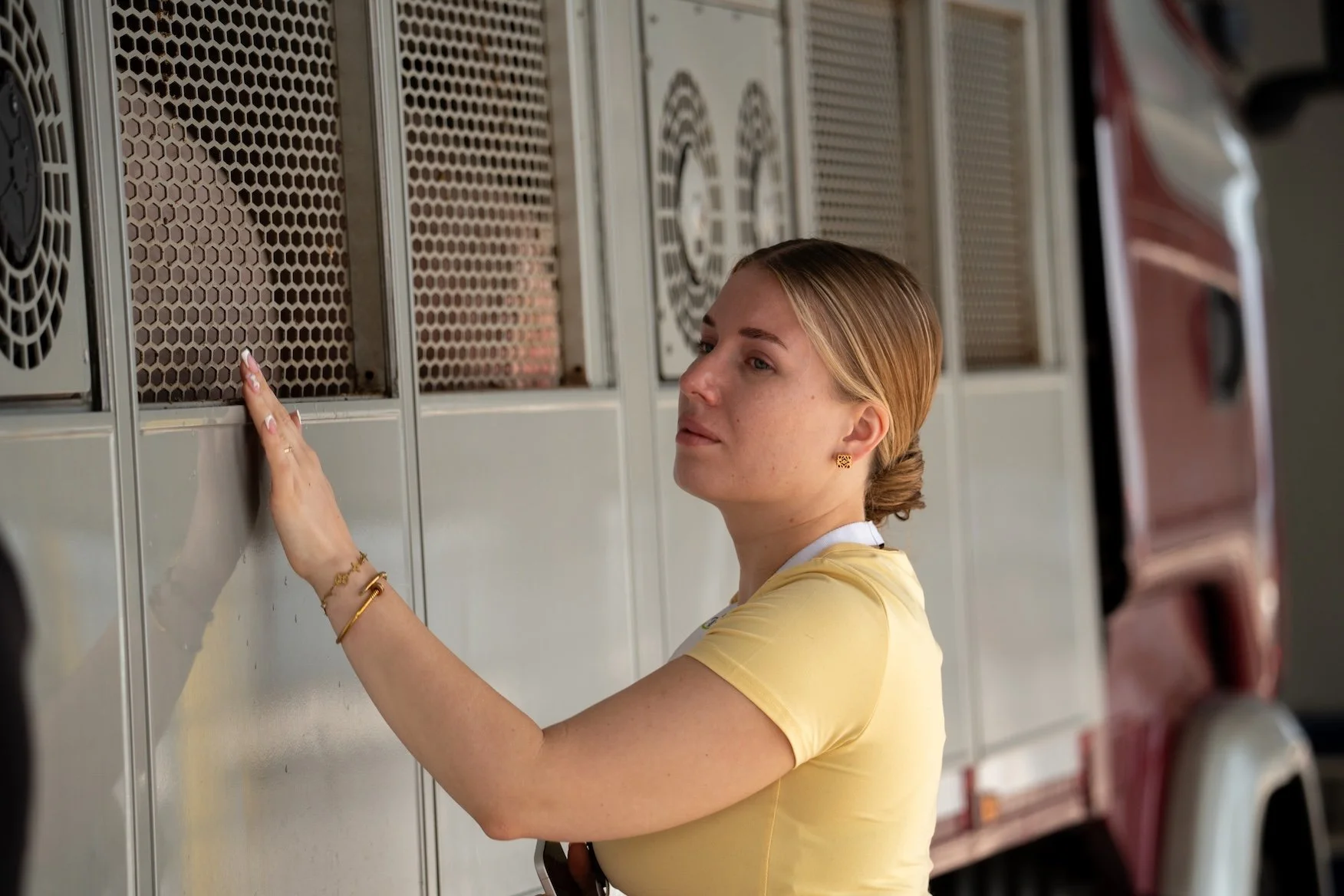
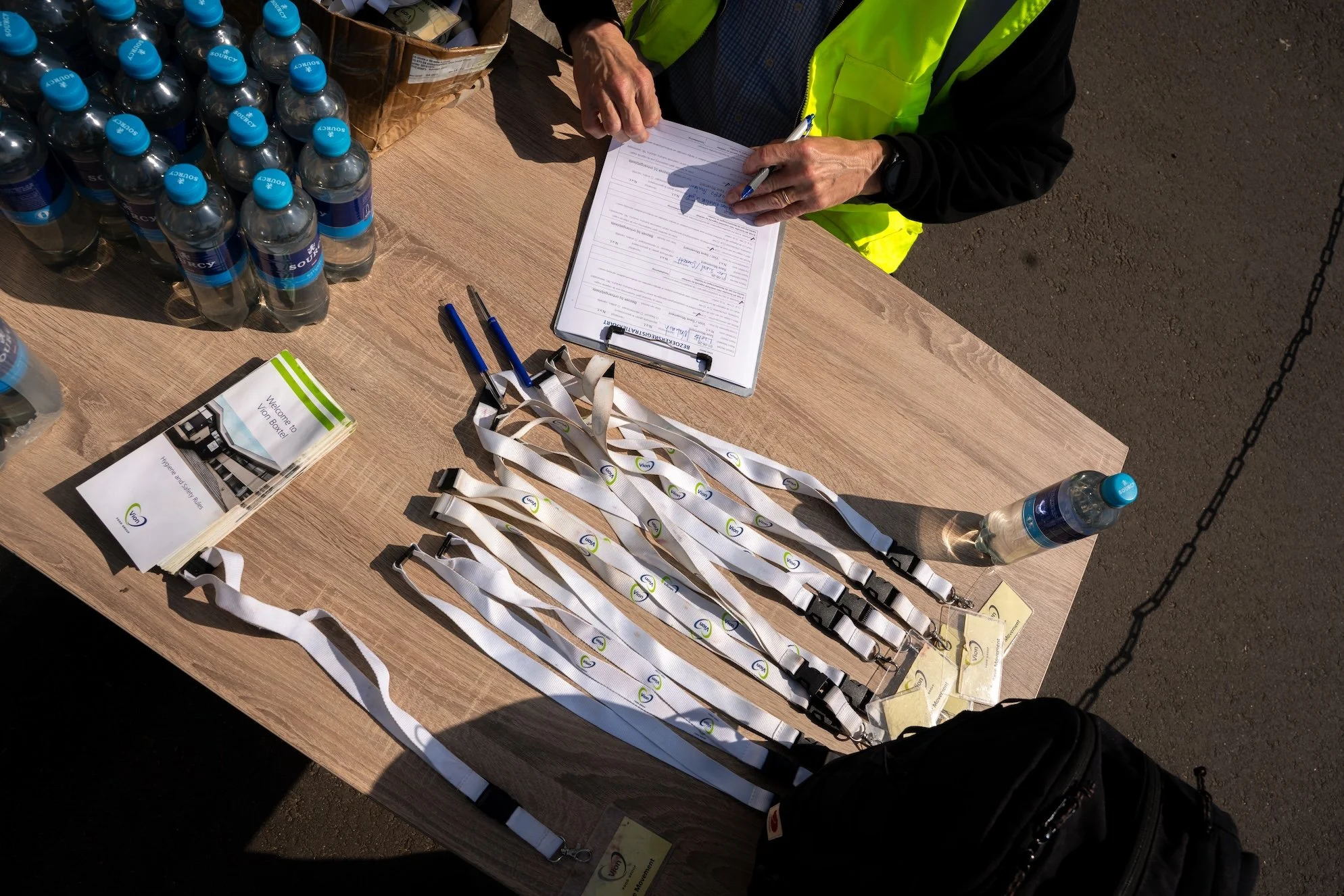
The coordinator briefly explains the rules of the event: do not give the pigs your own water or food, do not climb on the trucks, and no photographing employees, license plates, or company names. For Carmen Veldscholten from Enschede, it is her first time attending. She is a bit nervous. The 27-year-old became vegetarian this year after watching slaughterhouse videos online. Now she wants to see the animals with her own eyes. “I don’t want to look away anymore.”
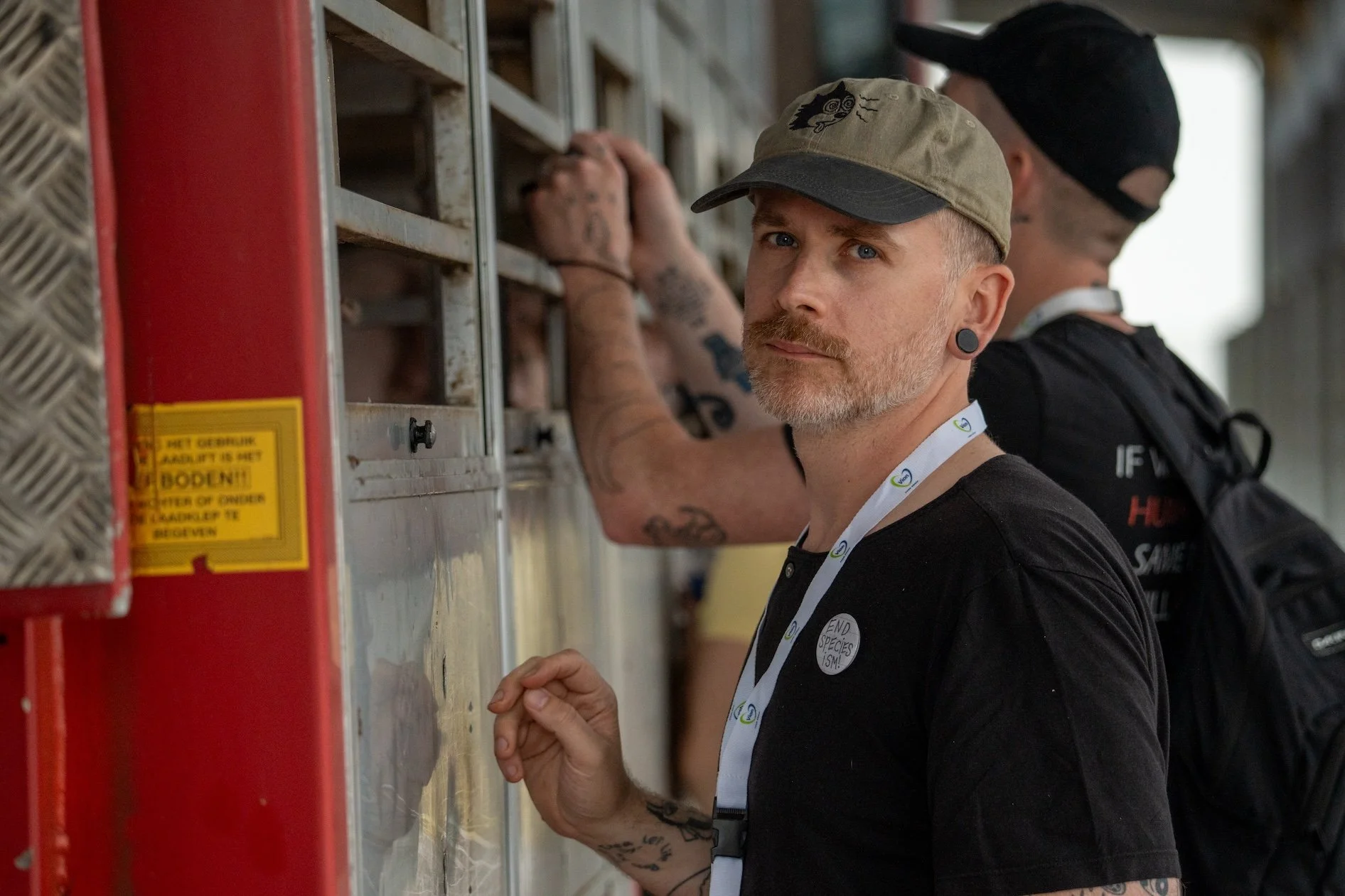
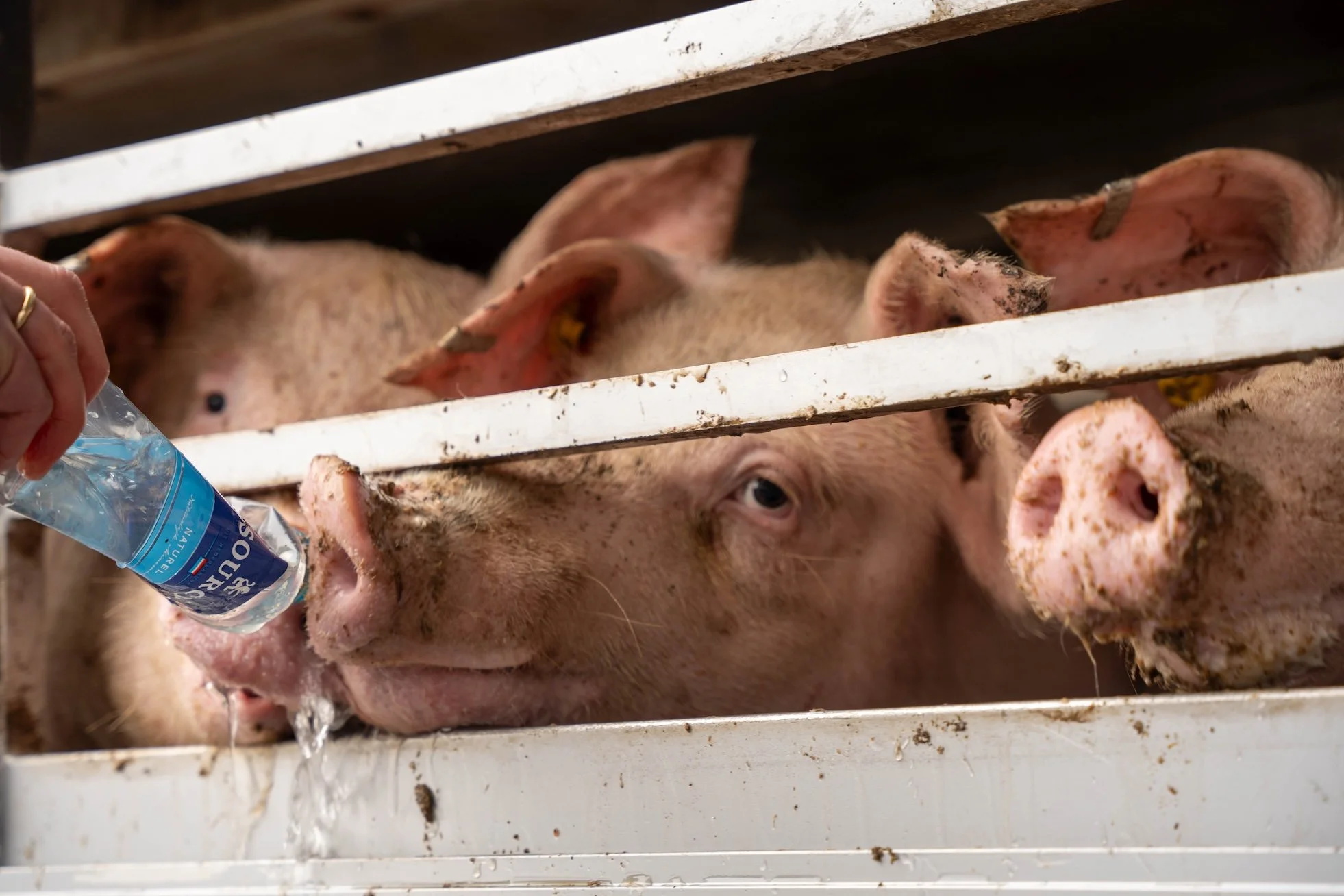
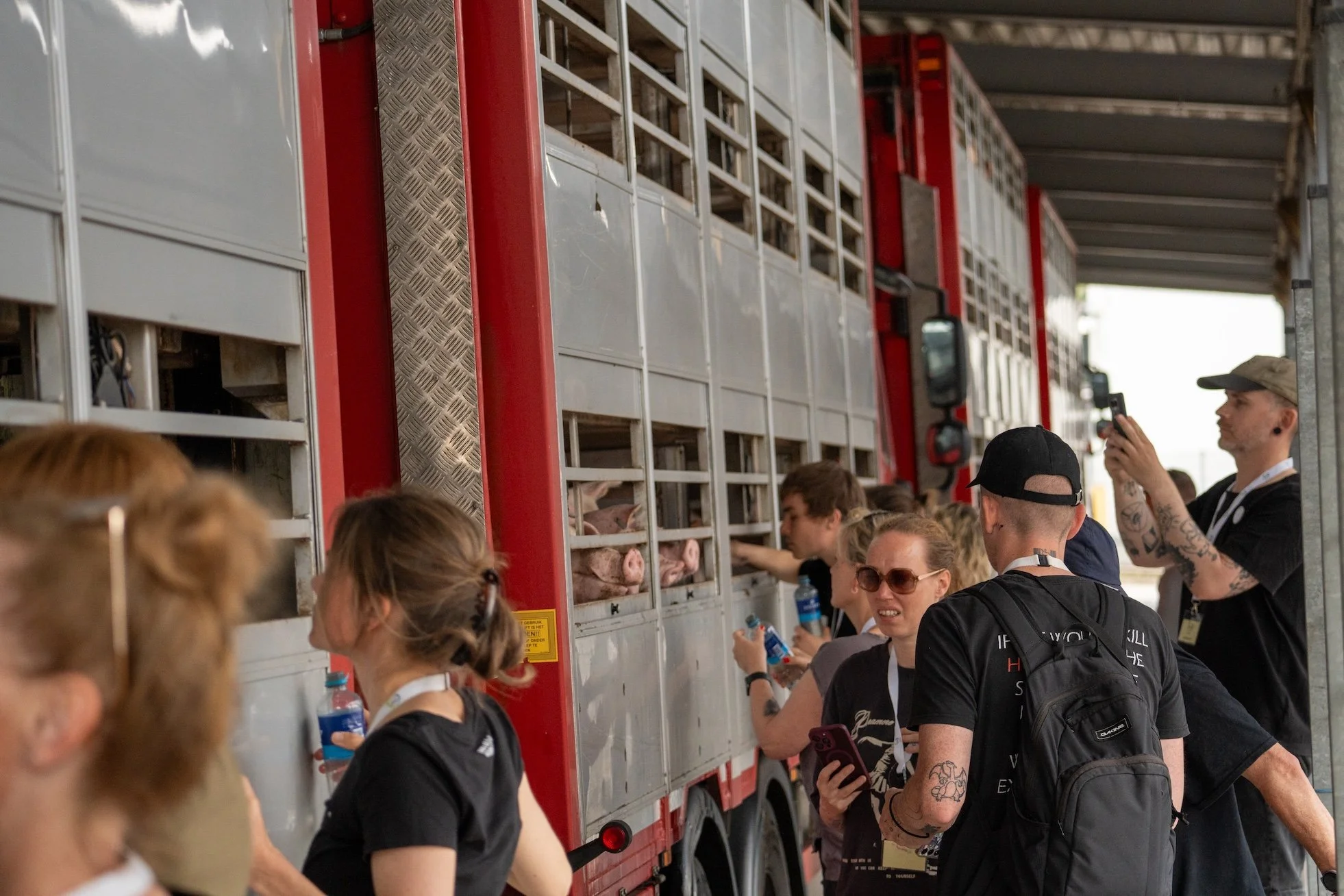
Veldscholten is one of the approximately fifteen activists who have gathered at the Brabant meat processor. Texts such as 'Stop killing animals' and 'Go vegan' adorn their T-shirts, caps, bags, and tattoos . When the gates to the premises open, a Vion employee is already awaiting their arrival. “Lots of familiar faces again,” he smiles kindly at the group. Veldscholten shows him her identification, receives a lanyard around her neck and a bottle of mineral water – not for her, but for the pigs.
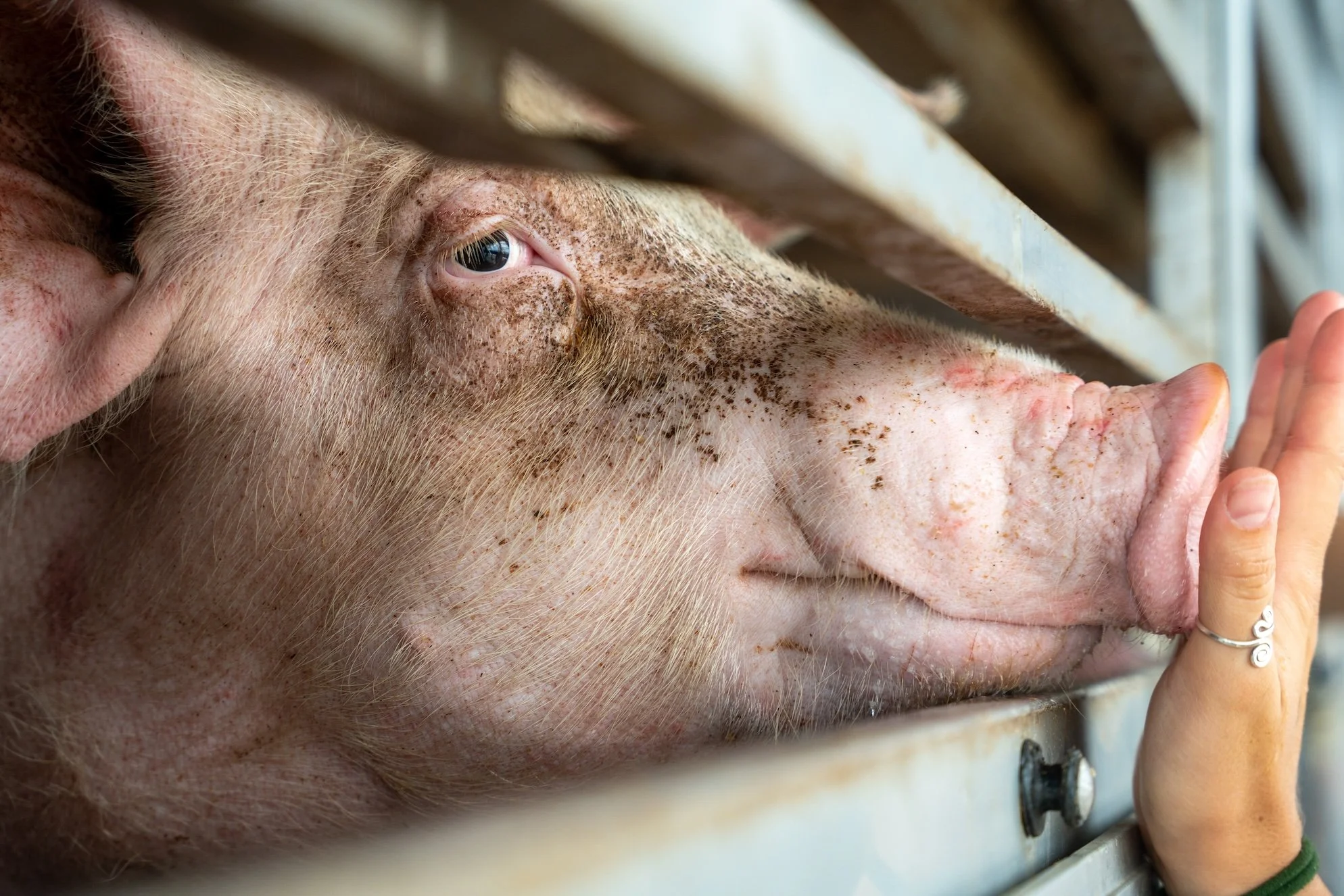
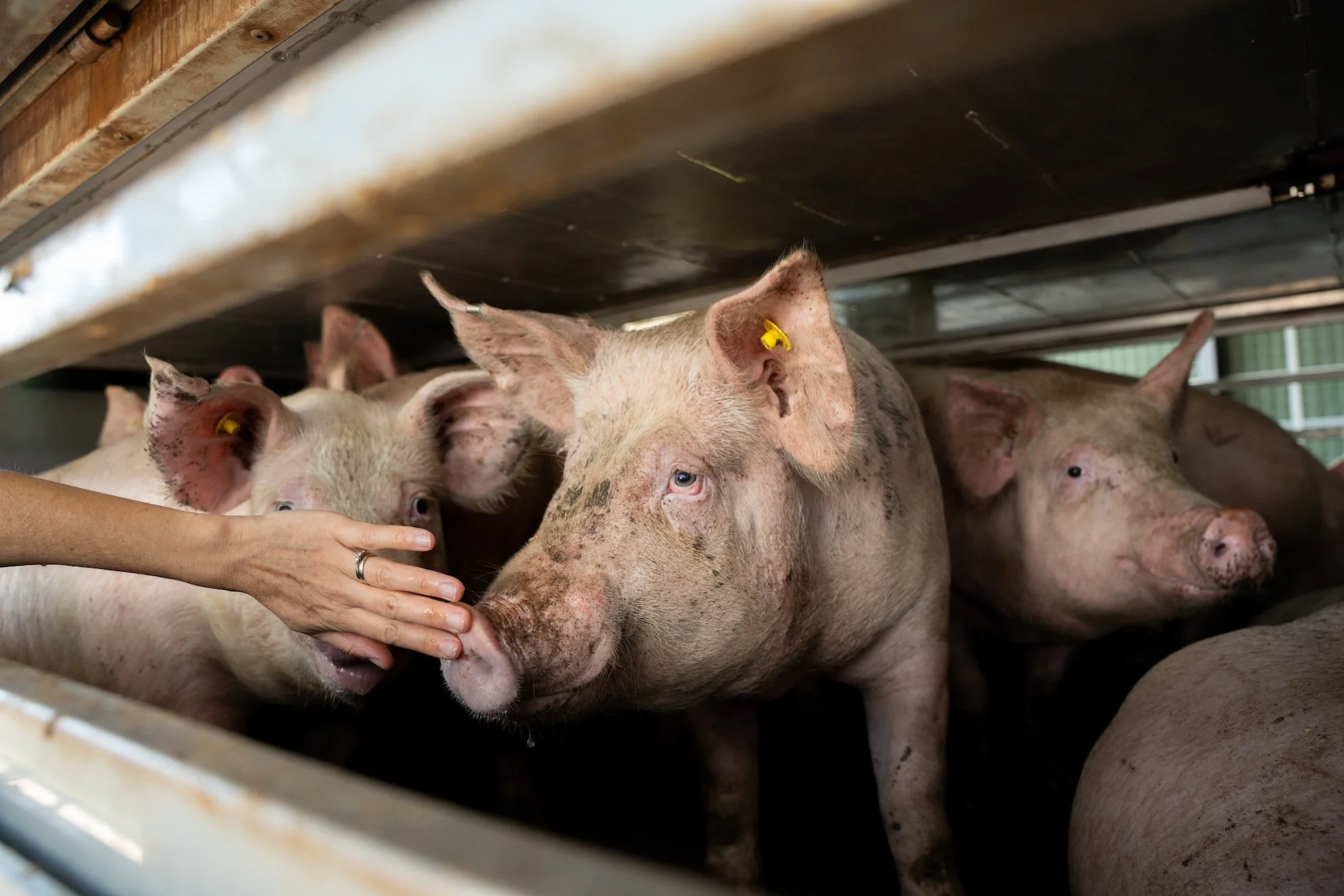
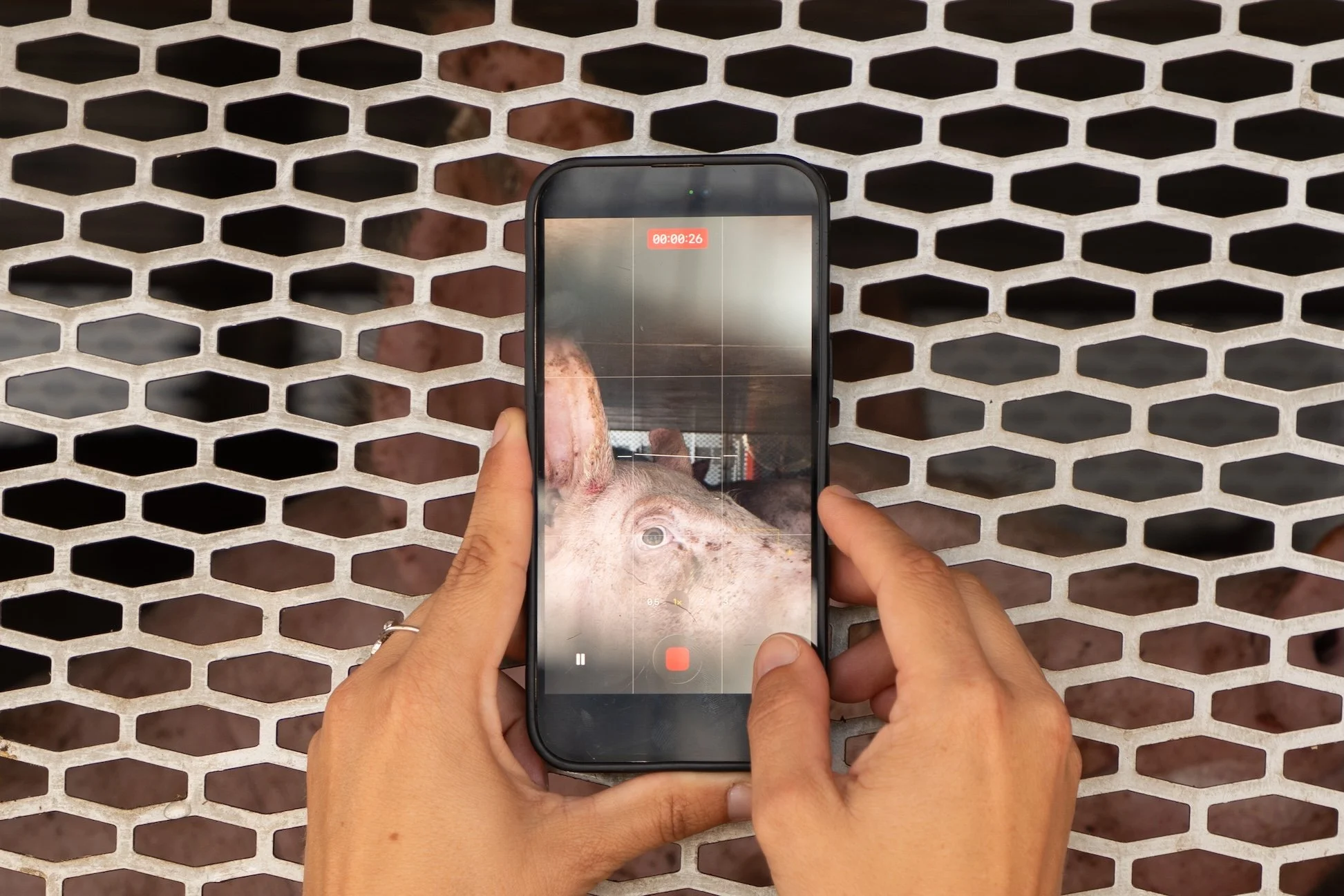
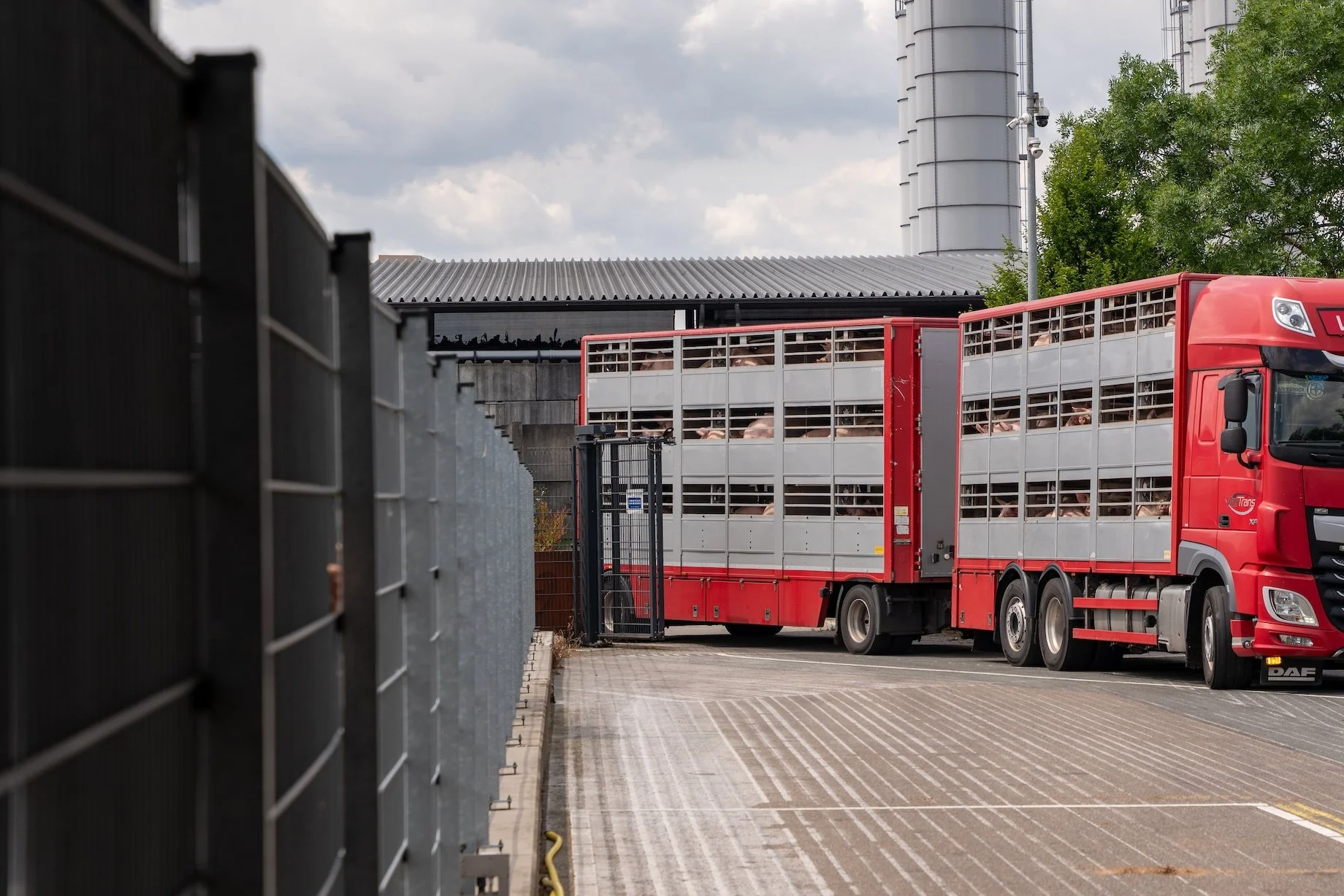
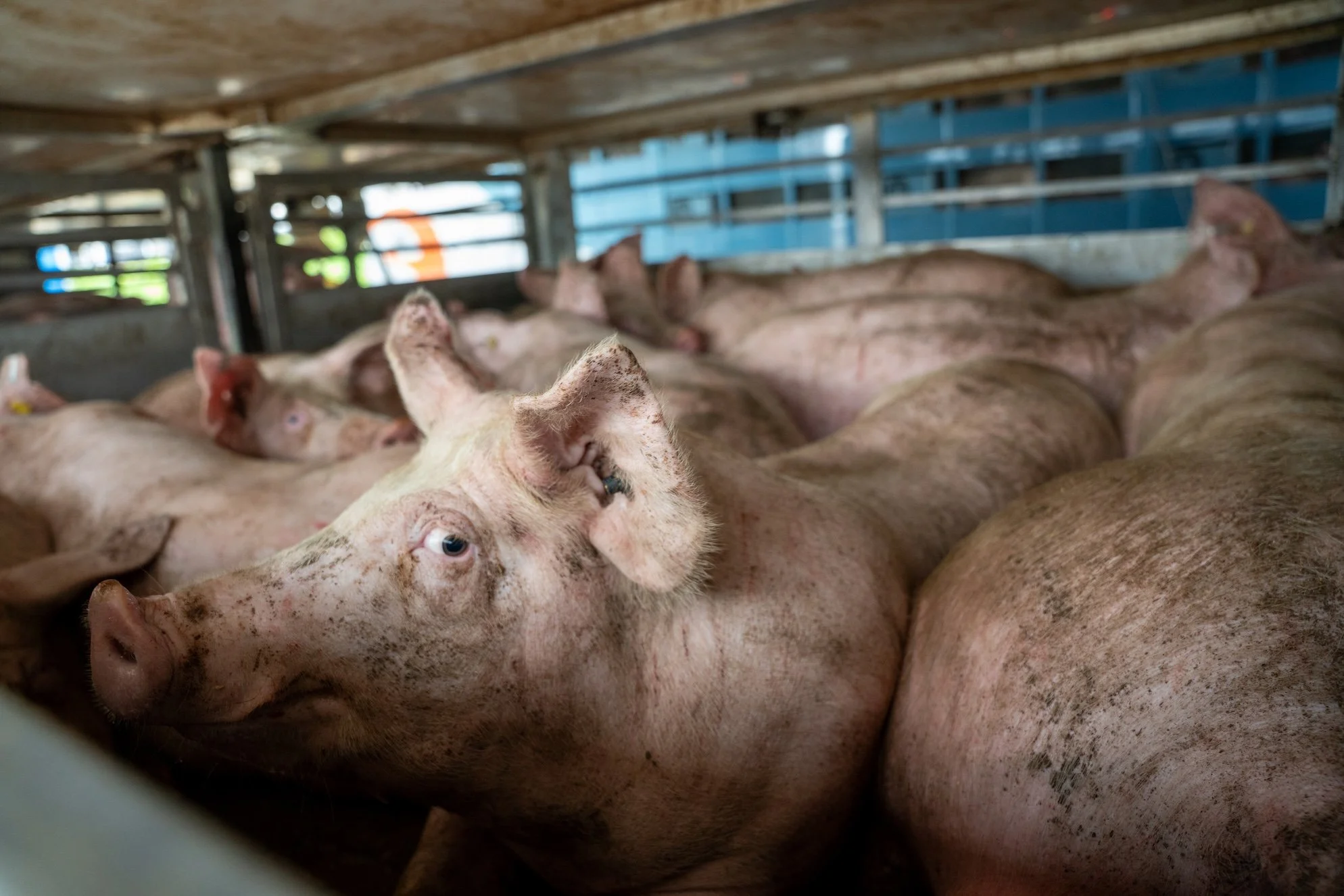
The event, held every two months, attracts a dedicated group of supporters, though newcomers join each time as well. People chat casually amongst themselves until the first truck appears around the corner. Then, the atmosphere changes. Conversations stop and people walk up to the truck, phones and cameras in hand to capture what they see. Behind the metal bars, pink bodies move past each other and eyes look up. Veldscholten places her hand on a snout. “I’m sorry,” she whispers, and she begins to cry.
Pigs Are Almost Always Out of Sight
Pigs are among the least visible farm animals in the Netherlands. In 2025, nearly 10 million pigs were kept in the country, and more than 14 million pigs were slaughtered. While cows graze in fields, sheep stand along dikes, and some chickens roam outdoors, pigs remain almost entirely hidden from public view.
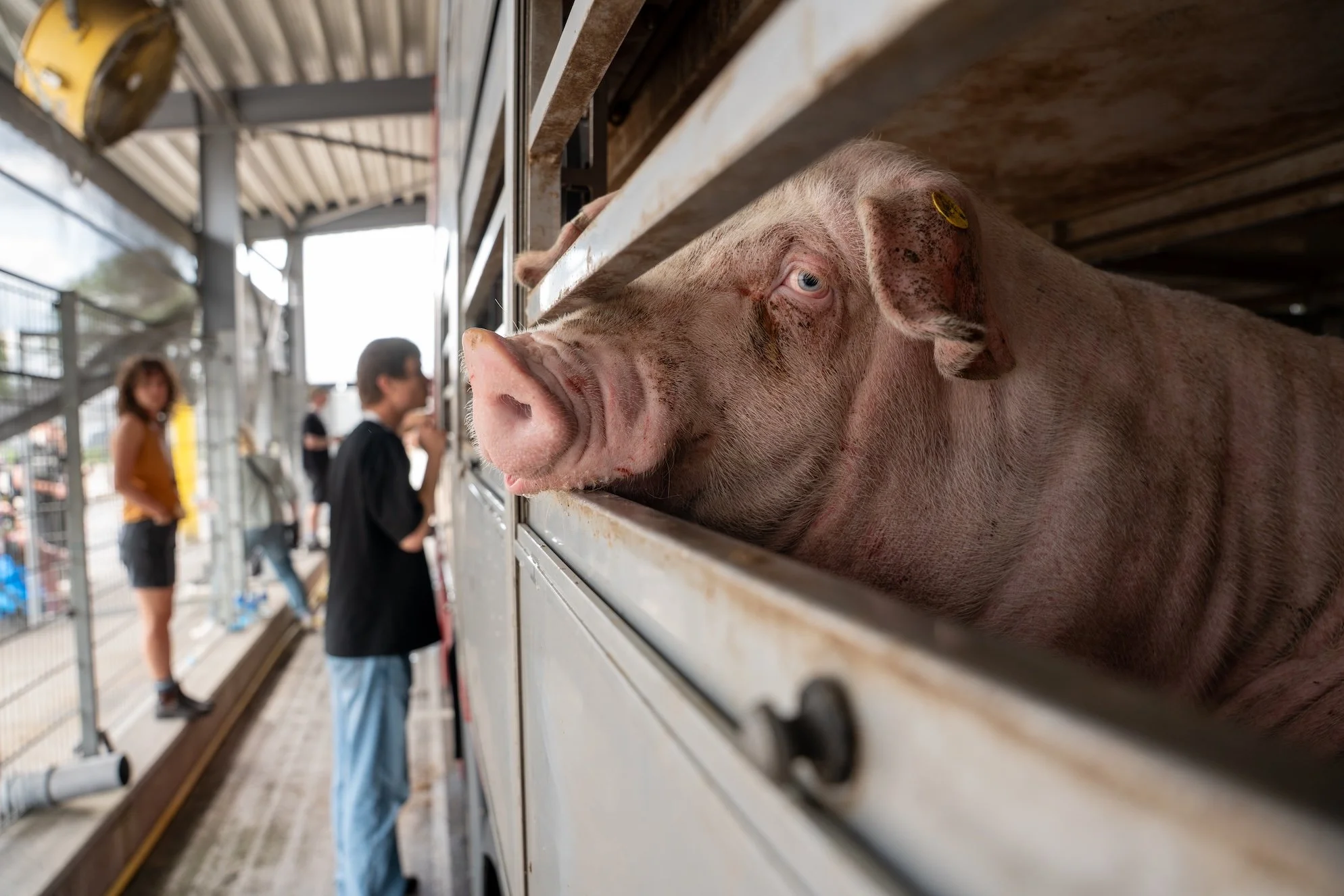
Almost all Dutch pigs live indoors without access to outdoor space. Only about 1 percent regularly go outside. For most pigs, the journey to the slaughterhouse is the first time they experience fresh air and daylight. It is also one of the few moments when the public has the opportunity to see a meat pig in real life. People may catch a glimpse on the highway, or during the vigils organized by Animal Save Netherlands at slaughterhouses around the country. “These gatherings are generally very peaceful,” says Lea Goodett, 43, the organization’s national coordinator. “This isn’t a protest. We’re not here against the slaughterhouse, we’re here for the animals.”
Run Over by a Truck Driver
The organization is part of the international Animal Save Movement, which began in Canada in 2011 by organizing events at pig slaughterhouses. The purpose of these gatherings - often called pig saves or vigils - is to bear witness to animals on their way to slaughter. The term pig save does not mean literally rescuing the animals. Rather, it means making their existence and fate visible. Photos and videos recorded by activists are shared online and circulated through international Animal Save networks, allowing a vigil in Boxtel to reach audiences far beyond the slaughterhouse gates.
The movement arrived in the Netherlands in late 2017 with its first action at the Boxtel slaughterhouse. Initially, Vion did not cooperate, and activists stood outside the facility along the road. The municipality intervened due to safety concerns and encouraged both sides to work together - a proposal accepted by both Vion and the activists. The safety risks became clear in 2020 during a similar event in Canada, when a truck driver struck and killed 65-year-old activist Regan Russell. She died at the scene.
Room for Different Perspectives
Since the cooperation began eight years ago, no incidents have occurred during the Boxtel pig saves. The mornings are well organized. “Our experience is that these gatherings take place in a constructive and harmonious atmosphere,” a Vion spokesperson says. The company is notably accommodating. Employees are there to supervise the events, and Vion distributes the bottles of water for the pigs, partly to ensure food safety. They encourage their drivers to stop their trucks near the activists, though the decision remains theirs. They can also park elsewhere in the waiting area. “We think it is positive that there is room for different perspectives in this way. Even when opinions differ, we believe mutual respect and open dialogue are important.”
Goodett appreciates the relationship she has with the slaughterhouse. “It’s special that we are welcome here. It may sound strange, but the bond with the employees has genuinely strengthened over the years.” Although debates are discouraged during the events, she welcomes open conversations with workers and drivers. “It’s important to keep seeing the people involved in the process as human beings, even when our views differ fundamentally.” Still, she does not describe the relationship as one of mutual respect. “It’s more a form of mutual tolerance.”
The cooperation and transparency also have limits. Activists have been allowed to observe parts of the slaughter process before, but cameras were not permitted. What happens outside may be filmed. What happens inside remains unseen.
Earsplitting Screams
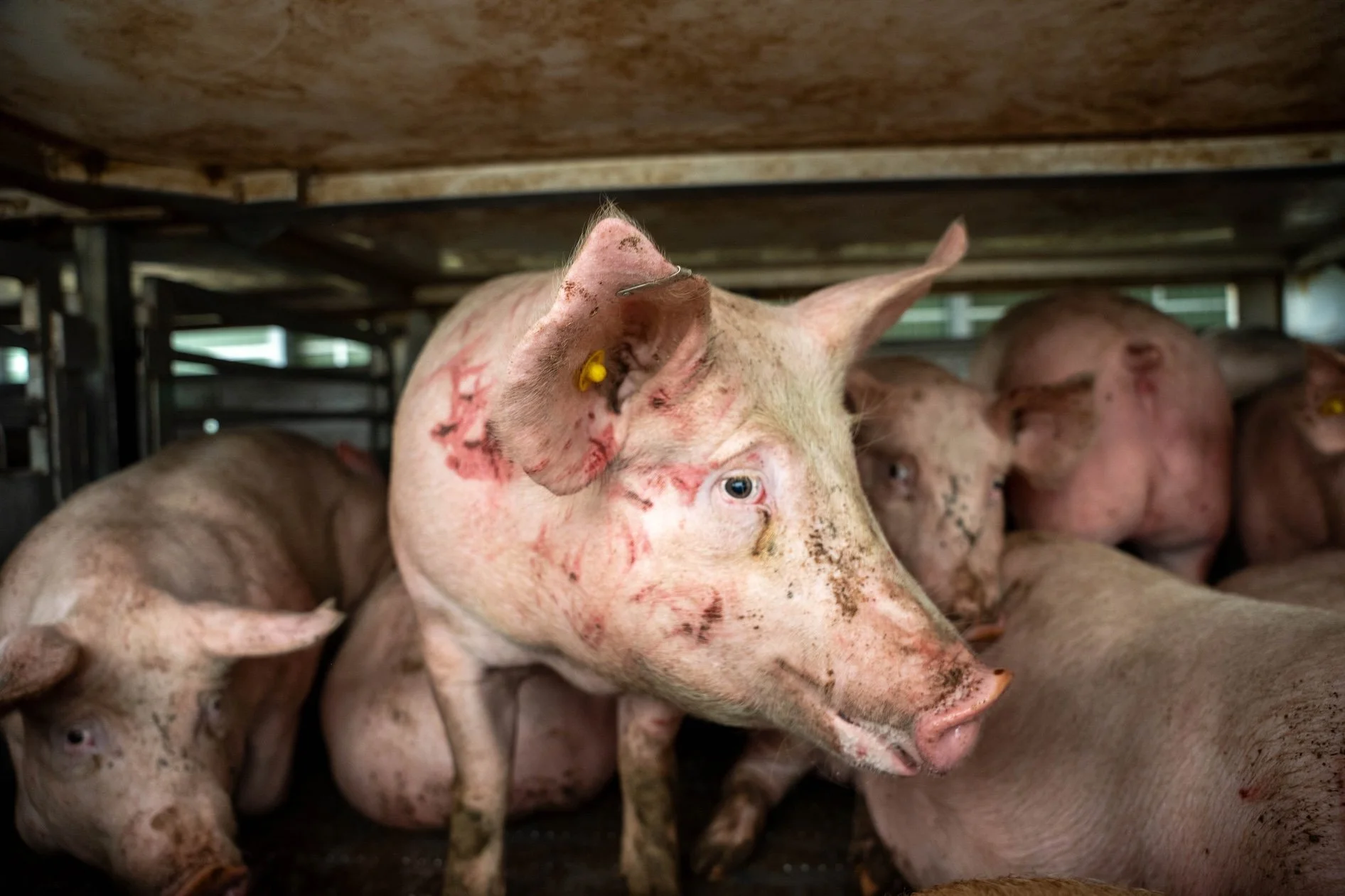
Vion’s Boxtel facility is the largest pork processor in the Netherlands. On average, 15,000 pigs are slaughtered there every day. The animals are only about seven months old when they arrive. Some pigs lie calmly together in the truck - likely animals that already knew one another from the same farm. Others fight, bite, and push each other. When pigs from different farms are mixed together, tensions arise because no social hierarchy has yet been established. The result: scratches, bleeding wounds, and earsplitting screams.
“You never get used to that,” says Bart Staassen, 39, from Nijmegen. He has been attending slaughterhouse vigils since 2024, and this is his thirteenth one. He brings a unique perspective. “My grandfather was a pig farmer,” he says. “Later on, he became a driver who collected pigs from farms and transported them to Boxtel. Now I’m standing here to give the pigs some love. A different generation, with a different purpose.”
When Staassen offers water to a pig, the animal eagerly drinks through the bars. He says visits affect him for days afterward. “It’s almost unreal to realize that every animal we meet today will soon no longer be alive.” Why does he keep coming? “The distance between humans and pigs is normally so great. I think it’s important to share the reality of the livestock industry with the outside world. Because when do you ever think about these animals? When do you ever see them?”
A Toll on Personal Well-Being
Animal Save’s events are also intended to encourage consumers to think about the animals behind animal products and to consider plant-based alternatives. Their impact became evident last year when television presenter Jurre Geluk attended a Boxtel vigil for an episode of the TV program Voorvechters. He was so moved by the pigs that he cried for the first time in years and immediately stopped eating meat.
Goodett has witnessed similar reactions many times. Even after attending nearly 100 vigils, she still becomes emotional. “This may well be my last vigil. It really takes a toll on your own well-being. I advise others not to do this too often, and now I think I need to follow my own advice.”
For newcomer Carmen Veldscholten, however, it is only the beginning. As the final truck enters the facility and the gates close again behind the activists, she reflects for a moment. “The first trucks were really difficult. But afterward, I could be there for the animals, and that feels good.” Mud splashes cover her yellow shirt and white skirt. “Next time,” she says, “I’ll wear dark clothes.”